What Sensor Can Replace STMicroelectronics STHS34PF80 While Keeping the TMOS10-12030 Lens?

Last Updated: 2026-05-19
Author: Ashton Myung Kim, CEO, Fresnel Factory Inc.
Reading Time: 7 minutes

Quick Answer

If a product was originally designed around the STMicroelectronics STHS34PF80 and the TMOS10-12030 Fresnel lens, the replacement strategy depends on whether the product must keep stationary presence detection or only needs motion detection.

  1. For motion detection with minimal mechanical change: Murata IRS-D200ST00R1 is a practical candidate because it is a low-profile SMD digital PIR sensor.
  2. For comparison: Excelitas PYD 2592 / 7765 can also be evaluated as an SMD PIR option, but Fresnel Factory’s simulation showed less distinct projected-image separation than Murata in this lens condition.
  3. For stationary presence detection: Excelitas TPiS 1S 1385 / 5029 CaliPile is a strong candidate, and Fresnel Factory confirmed through simulation that CaliPile can be a good option when presence detection is required.
  4. For minimum enclosure impact: the first design goal should be to keep the TMOS10-12030 outer lens shape, mounting footprint, and sensor-to-lens distance as close as possible to the original design.
  5. Before changing sensors: engineers should verify optical signal distribution, threshold setting, PCB height, firmware behavior, and real detection performance with the final enclosure.

Why does STHS34PF80 replacement planning matter for TMOS-based products?

The STMicroelectronics STHS34PF80 is an infrared motion and presence detection sensor based on TMOS technology. ST describes the device as an uncooled, factory-calibrated infrared sensor operating in the 5 µm to 20 µm wavelength range. It is designed to detect motion, presence, or an overtemperature condition by measuring IR radiation from objects within its field of view.

In many real projects, the sensor is not the only fixed part of the design. The optical lens, mechanical opening, adhesive structure, PCB location, and enclosure tooling may already be completed before production. This was the situation in a project with a global building-control company, where the TMOS10-12030 lens and mechanical structure had already been designed around the original sensor.

In that case, the engineering question is not simply “which sensor has the best specification?” The more practical question is:

Which sensor can be evaluated while keeping the existing TMOS10-12030 lens and minimizing changes to the mechanical enclosure?

Can the TMOS10-12030 lens be reused with another sensor?

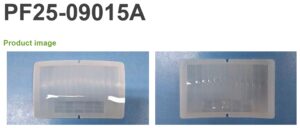
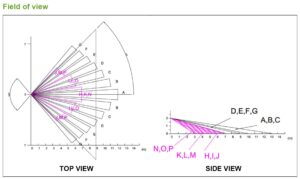
Yes, but only after optical simulation and signal validation. The TMOS10-12030 lens was originally designed for the STHS34PF80 sensor geometry. When another sensor is placed behind the same Fresnel lens, the projected IR image, signal distribution, and sensing-element geometry change.

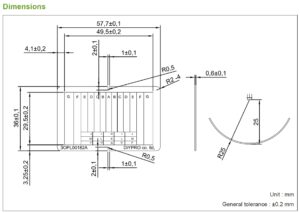
Fresnel Factory evaluated replacement candidates by keeping the original lens condition as much as possible. The key design constraint was to maintain the existing sensor-to-lens distance of approximately 3.23 mm and avoid changes to the lens mounting footprint. This approach is useful when enclosure tooling is already close to release or when the customer wants to avoid a full mechanical redesign.

However, “lens reuse” does not mean the replacement sensor will behave exactly like STHS34PF80. PIR sensors, thermopile sensors, and TMOS sensors have different sensing principles and different signal-processing behavior.
The lens may be physically reusable, but the firmware threshold, signal interpretation, and final detection map must be revalidated.

What are the main sensor candidates for replacing STHS34PF80?

The following candidates are practical starting points for engineering evaluation when a product originally used STHS34PF80 with the TMOS10-12030 lens.

Sensor model Manufacturer Sensor type Best use case Presence detection Lens reuse potential
STHS34PF80 / STHS34PF80TR STMicroelectronics TMOS infrared sensor Original motion and presence detection design Yes Original design condition
Murata IRS-D200ST00R1 Murata SMD digital PIR sensor Short-term motion-detection replacement with low-profile package No, motion detection only High, based on Fresnel Factory simulation
Excelitas PYD 2592 / 7765 Excelitas Low-power dual-element SMD DigiPyro PIR sensor Alternative SMD PIR comparison candidate No, motion detection only Possible, but simulation showed less distinct projected-image separation than Murata
Excelitas TPiS 1S 1385 / 5029 CaliPile Excelitas Thermopile-based CaliPile sensor Presence, motion, and temperature-related sensing Yes Good candidate when stationary presence detection is required; simulation validation recommended
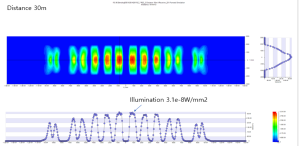
Fresnel Factory optical simulation comparing projected IR distribution and signal behavior
for STHS34PF80, Murata IRS-D200ST00R1, Excelitas PYD 2592 / 7765, and Excelitas TPiS 1S 1385 / 5029 CaliPile
using the TMOS10-12030 lens condition.

Fresnel Factory optical simulation comparing projected IR distribution and signal behavior
for STHS34PF80, Murata IRS-D200ST00R1, Excelitas PYD 2592 / 7765, and Excelitas TPiS 1S 1385 / 5029 CaliPile
using the TMOS10-12030 lens condition.

Why is Murata IRS-D200ST00R1 a practical motion-detection candidate?

Murata IRS-D200ST00R1 is a small, low-profile, reflowable SMD digital PIR sensor. Murata lists the IRS-D series as a 6 mm × 6 mm × 2.6 mm SMD digital PIR sensor with I²C output. This makes it attractive when the design must avoid a tall through-hole PIR package and preserve the existing mechanical stack-up.

In Fresnel Factory’s simulation using the TMOS10-12030 lens condition, Murata’s SMD PIR sensor produced a clearer projected image and more usable signal separation than the Excelitas PYD 2592 / 7765 comparison case. This does not mean it is a drop-in equivalent to STHS34PF80. It means it is a practical candidate when the product can accept motion detection only.

The key limitation is important: a PIR sensor detects changes in IR energy caused by movement. It does not provide the same stationary presence behavior as the original TMOS-based design.

How does Excelitas PYD 2592 / 7765 compare with Murata IRS-D200ST00R1?

Excelitas PYD 2592 / 7765 is a low-power dual-element SMD DigiPyro PIR sensor. It is a useful comparison candidate because it is also an SMD PIR device and can be considered when the design team wants a digital PIR alternative.

In Fresnel Factory’s lens simulation, however, the projected image from PYD 2592 / 7765 appeared more merged and less distinct than the Murata case under the same TMOS10-12030 lens condition. This matters because the Fresnel lens forms zones of IR energy on the sensing element. If the projected zones become less distinct, the firmware may need more careful threshold tuning and the final detection pattern may differ from the original design.

PYD 2592 / 7765 should therefore be treated as an evaluation candidate, not as the first-choice recommendation when minimum optical change is the main priority.

What if stationary presence detection is required?

If the product must detect stationary presence, a PIR-only replacement is usually not sufficient. This is where Excelitas TPiS 1S 1385 / 5029 CaliPile becomes important.

CaliPile is a thermopile-based intelligent IR sensor family. Excelitas describes the TPiS 1S 1385 CaliPile sensor as capable of motion detection, presence monitoring, and temperature measurement from a compact sensor package. This makes it a stronger candidate when the original design used STHS34PF80 not only for motion, but also for stationary presence detection.

Fresnel Factory’s simulation confirmed that CaliPile can be a good choice when stationary presence detection is required. The final decision should still be made after validating the optical distribution, real detection distance, ambient-temperature behavior, firmware threshold, and product-level detection map with the
final enclosure.

Can the same mechanical enclosure be kept?

In many replacement projects, the most expensive change is not the sensor itself. It is the enclosure tooling, lens opening, mounting structure, adhesive design, and production validation.

For this reason, Fresnel Factory’s recommended approach is:

  1. Keep the TMOS10-12030 outer lens shape if the enclosure opening is already fixed.
  2. Keep the sensor-to-lens distance close to the original value whenever possible.
  3. Change the PCB and sensor footprint first before changing the enclosure.
  4. Use simulation to compare projected IR distribution across candidate sensors.
  5. Validate the final design with motion and presence test scenarios, not only with component datasheets.

If a new optical pattern is required, Fresnel Factory can usually redesign the internal Fresnel pattern while keeping the outer lens footprint. This allows the customer to reduce enclosure impact while still adapting the lens to a different sensor geometry.

Which sensor should engineers choose?

Engineering priority Recommended candidate Reason
Keep the existing TMOS10-12030 lens and minimize mechanical changes Murata IRS-D200ST00R1 Low-profile SMD PIR package; simulation showed clear projected-image behavior under the existing lens condition
Evaluate another SMD PIR option Excelitas PYD 2592 / 7765 Digital SMD PIR candidate, but projected-image separation should be checked carefully
Maintain stationary presence detection Excelitas TPiS 1S 1385 / 5029 CaliPile Thermopile-based sensor capable of presence monitoring; confirmed as a good candidate by Fresnel Factory simulation
Preserve original behavior as closely as possible STHS34PF80 / STHS34PF80TR Original TMOS sensor condition; verify supply continuity and procurement strategy separately

What should be validated before changing the sensor?

Before releasing a replacement sensor design, engineers should validate the following items:

  • Optical projection: Does the Fresnel lens focus IR energy onto the active sensing area?
  • Sensor-to-lens distance: Is the original distance, approximately 3.23 mm in this project condition, still usable?
  • Signal strength by angle: Does the signal remain strong enough at the target field of view?
  • Presence behavior: Is stationary human presence required, or is motion detection sufficient?
  • Firmware threshold: Does the new sensor require different filtering or threshold logic?
  • Mechanical height: Does the package height affect PCB location, enclosure clearance, or lens distance?
  • Environmental behavior: Does the sensor remain stable under expected temperature and sunlight conditions?
  • Product-level detection map: Does the final device meet the required 5 m, 10 m, or other target detection distance?

How can Fresnel Factory support sensor replacement projects?

Fresnel Factory supports IR sensor projects from optical simulation to lens manufacturing and performance testing.
For projects using STHS34PF80, Murata IRS-D200ST00R1, Excelitas PYD 2592 / 7765, or Excelitas TPiS 1S 1385 / 5029 CaliPile, the recommended workflow is:

  1. Review the existing sensor, PCB, lens, and enclosure constraints.
  2. Simulate candidate sensors with the existing lens geometry.
  3. Compare projected IR image, signal strength, and blind-zone risk.
  4. Decide whether the current TMOS10-12030 lens can be reused.
  5. If needed, redesign only the internal Fresnel pattern while keeping the same outer footprint.
  6. Validate the final product with real detection tests using the customer’s target motion and presence scenarios.

FAQ

Can Murata IRS-D200ST00R1 replace STHS34PF80 directly?

Not directly. Murata IRS-D200ST00R1 is a PIR motion sensor, while STHS34PF80 is a TMOS-based infrared motion and presence sensor. Murata can be a practical candidate when motion detection is acceptable and mechanical change must be minimized.

Can the TMOS10-12030 lens be reused with Murata IRS-D200ST00R1?

Fresnel Factory’s simulation showed that Murata IRS-D200ST00R1 can be evaluated with the existing TMOS10-12030 lens condition. The final design should still be verified with real product-level detection testing.

Does Murata IRS-D200ST00R1 support stationary presence detection?

No. Murata IRS-D200ST00R1 is a PIR motion sensor. It is suitable for detecting changes caused by movement, but it should not be treated as an equivalent replacement for stationary presence detection.

Is Excelitas PYD 2592 / 7765 a possible replacement?

Yes, it is a possible SMD PIR evaluation candidate. However, Fresnel Factory’s simulation showed less distinct projected-image separation than the Murata case under the same lens condition.

Which sensor is better if stationary presence detection is required?

Excelitas TPiS 1S 1385 / 5029 CaliPile is a strong candidate when stationary presence detection is required.
Fresnel Factory confirmed through simulation that CaliPile can be a good option for this requirement.

Will changing the sensor require changing the lens?

Not always. If the outer lens footprint and sensor-to-lens distance can be maintained, the same lens may be reused or the internal Fresnel pattern may be redesigned while keeping the same outer shape.

What is the most important validation step?

The most important step is product-level validation. Component datasheets are not enough because the final detection performance depends on the lens, enclosure, sensor position, firmware threshold, and real use case.

Next step: optical simulation and lens validation

If your product uses STMicroelectronics STHS34PF80 or was designed around the TMOS10-12030 lens, the safest next step is to evaluate replacement sensors through optical simulation before changing the enclosure.

Fresnel Factory can help compare Murata IRS-D200ST00R1, Excelitas PYD 2592 / 7765, and Excelitas TPiS 1S 1385 / 5029 CaliPile under your existing lens and mechanical constraints.


Submit a custom IR lens design request

References


About the author: Ashton Myung Kim is CEO of Fresnel Factory Inc., an optical lens manufacturer specializing in Fresnel lenses for PIR, TMOS, thermopile, LiDAR, and infrared sensing applications. Fresnel Factory provides optical simulation, custom lens design, tooling, injection molding, and IR sensing performance validation.

How to Choose a PIR Fresnel Lens for Doorbells and Home Security Cameras

Last Updated: 2026-04-27
Author: Ashton Myung Kim, CEO, Fresnel Factory Inc.
Reading Time: 8–10 minutes
Target Readers: Mechanical engineers, circuit designers, optical engineers, and product engineers developing doorbells, home security cameras, and smart home motion sensors.

Quick Answer

For a consumer doorbell or home security camera, the PIR Fresnel lens should not be selected only by appearance. The lens defines where the device can detect people, how often it may trigger falsely, and how well the PIR sensor works with a camera, radar, or low-power wake-up circuit.

  • For wall-mounted cameras and doorbells, a directional PIR Fresnel lens is usually more practical than a fully omni-directional lens.
  • Omni-directional “golf-ball” type PIR lenses can detect broadly, but they may increase false triggers from the sky, lighting, wind-driven objects, or unnecessary upper and lower zones.
  • A PIR lens for home cameras should define detection distance, horizontal angle, vertical angle, mounting height, and blind-zone tolerance before tooling starts.
  • For battery-powered products, PIR is often used as the first wake-up sensor, while radar or camera sensing may be activated afterward.
  • Mechanical design should consider lens appearance, snap-fit structure, adhesive sealing, waterproofing, and lens-to-sensor alignment together.
  • If the product requires a flat or hidden lens appearance, detection performance may be lower than a more visible but optically optimized Fresnel lens.

Why does the PIR lens matter in doorbells and home cameras?

In many smart home products, the PIR sensor is not just a small component added to the PCB. It is part of the product’s user experience. A doorbell or home security camera has to detect a person approaching the entrance, but it should not trigger every time a tree moves, sunlight changes, or a warm object passes outside the useful field of view.

This is where the PIR Fresnel lens becomes important. The pyroelectric sensor reacts to changes in infrared radiation, mainly from human body heat in the long-wave infrared region. However, the sensor itself does not know whether the signal came from a person, a pet, a lamp, or a moving warm object. The lens creates detection zones and decides which areas are optically emphasized or ignored.

For this reason, PIR lens design is closely related to both mechanical design and circuit design. The housing, PCB position, sensor window, lens material, adhesive structure, waterproofing method, and firmware trigger logic all affect the final sensing performance.

What is the main difference between an omni-directional PIR lens and a directional PIR lens?

An omni-directional PIR lens is designed to detect in many directions. It is often used in ceiling-mounted occupancy sensors or room sensors where detection in all directions is useful.

However, a wall-mounted doorbell or home camera usually has a different requirement. It normally needs to detect people coming from the front or side, not from the ceiling, sky, or unnecessary upper zones.

Lens Type Typical Use Advantage Risk in Doorbell / Home Camera
Omni-directional PIR lens Ceiling sensor, room occupancy sensor Broad detection area Higher risk of false triggers from unnecessary directions
Directional PIR lens Wall-mounted camera, doorbell, switch-height sensor Better control of detection area Lens orientation and mounting position must be controlled
Flat appearance PIR lens Consumer product with design priority Cleaner exterior design Detection distance and zone separation may be reduced
Custom PIR Fresnel lens Product-specific detection area Optimized for product requirement Requires tooling cost and development schedule

For a wall-mounted device, detecting too much area can be worse than detecting less area. A lens that looks powerful on paper may create unwanted detection zones above, below, or outside the camera’s useful view.

Why can omni-directional PIR lenses cause false triggers?

In a doorbell or home camera, the useful detection area is usually limited. The device is looking at a porch, entrance, hallway, garage, or garden path. If the PIR lens detects too broadly, it may react to areas that the product does not actually need to monitor.

Typical false-trigger sources include:

  1. Sunlight or reflected light from outside.
  2. Warm air movement near the housing.
  3. Moving tree branches or curtains.
  4. Cars, pets, or people outside the intended detection zone.
  5. Ceiling lights or sky-facing detection zones.
  6. Thermal changes caused by wind, rain, or outdoor temperature changes.

This is why a PIR lens for a doorbell or home camera should be designed around the actual mounting position and target human path, not just the widest possible angle.

What detection specifications should be fixed before selecting a PIR lens?

Before choosing an existing lens or starting a custom lens design, the engineering team should define the detection specification clearly.

Item Recommended Definition
Mounting type Wall-mounted, ceiling-mounted, corner-mounted, or device-integrated
Mounting height Example: 1.2 m, 1.6 m, 2.4 m, or product-specific height
Detection distance Example: 3 m, 5 m, 8 m, 13 m, or product-specific distance
Horizontal detection angle Example: 90°, 110°, 120°, or product-specific angle
Vertical detection angle Important for reducing sky, ceiling, and floor false triggers
Target object Adult human, child, pet exclusion, vehicle exclusion, or other condition
Sensor model PIR sensor part number and sensor window size
Lens material Usually HDPE or PIR-transmissive PE-based material
Lens position tolerance Distance from sensor, X/Y alignment, and tilt tolerance
Exterior design limit Visible dome, flat window, hidden lens, black appearance, or white appearance
Waterproof level Indoor only, IP65, IP67, or product-specific requirement

The most important point is that detection distance and detection angle must be defined before tooling. If these values are not fixed, the lens design can be delayed even if the mechanical housing is already complete.

How should mechanical engineers design the PIR lens area?

Mechanical engineers often want the PIR lens to look like a clean window rather than a visible sensor dome. This is understandable, especially for consumer products such as doorbells and home cameras.

However, the PIR lens is not a simple cosmetic window. Its internal Fresnel pattern forms optical zones. If the lens is made too flat, too small, or placed too far from the sensor, the detection performance can drop.

Mechanical Item Design Consideration
Lens shape Dome, curved rectangle, flat-looking window, or custom shape
Assembly method Snap-fit, hook structure, ultrasonic welding, adhesive, or insert assembly
Waterproofing Adhesive sealing, gasket, O-ring, or compressible foam tape
Sensor alignment PIR sensor center must match the optical center of the lens
Wall thickness Housing walls should not block the lens viewing angle
Cosmetic surface Black, white, translucent, or hidden appearance
Tooling risk Custom lens shape requires optical pattern and mold design together

For indoor devices, snap-fit or hook structures may be acceptable. For outdoor doorbells and cameras, adhesive sealing becomes more important. Fresnel Factory often recommends DSA150 for many indoor and outdoor applications. For higher waterproof requirements, DSA300 can also be considered because the adhesive layer may act partly like a compressible sealing structure.

DSA150 reference:
View DSA150 adhesive information

DSA300 reference:
View DSA300 adhesive information

How should circuit designers think about PIR, radar, and camera wake-up logic?

In low-power doorbells and home cameras, PIR is often used as the first trigger. The PIR sensor detects possible human movement, then wakes up a higher-power sensing block such as a camera, radar, or AI processor.

A typical wake-up logic can be:

  1. The PIR lens defines the useful detection zone.
  2. The PIR sensor detects a thermal motion event.
  3. The MCU wakes from low-power mode.
  4. The camera, radar, or wireless module activates.
  5. Software checks whether the event is a person, pet, vehicle, or false trigger.
  6. The device records video, sends a notification, or returns to sleep.

This means the PIR field of view should normally be equal to or slightly wider than the radar or camera confirmation zone. If the PIR lens detects too narrow an area, the device may miss an approaching person before the camera wakes up. If it detects too wide an area, the product may wake up too often and waste battery.

For this reason, the PIR lens, radar FOV, camera FOV, and firmware wake-up threshold should be discussed together.

Is a flat PIR lens always better for consumer product design?

Not always. A flat-looking PIR lens may improve the exterior design, but it can reduce detection performance if the optical pattern, sensor distance, or lens aperture becomes too limited.

For doorbells and home cameras, there is usually a trade-off:

Priority Better Lens Direction
Maximum detection distance More optically optimized Fresnel shape
Clean exterior design Flat or hidden lens structure
Lower false-trigger rate Directional lens with controlled vertical FOV
Lower tooling risk Existing mass-production lens
Best product-specific performance Custom lens design
Fastest development Existing lens plus housing adjustment

If the product is still in the concept stage, it is usually safer to test with an existing PIR lens first. After detection distance, angle, and false-trigger behavior are confirmed, the team can decide whether a custom lens is necessary.

When is a custom PIR Fresnel lens worth the development cost?

A custom lens is worth considering when the product cannot meet its requirement with an existing lens.

Typical cases include:

  1. The housing requires a special rectangular or curved lens shape.
  2. The PIR lens must be hidden behind a cosmetic window.
  3. The detection zone must match the camera FOV precisely.
  4. The product must reduce false triggers from the upper or lower field.
  5. The mounting height is unusual.
  6. The customer requires a specific detection pattern.
  7. Existing lens options do not meet both design and performance targets.

However, custom development requires clear specifications. Both product specification and product shape should be fixed before lens development proceeds. As a practical reference, a custom PIR lens project may require several weeks before the first injection sample, depending on optical design, mechanical review, mold fabrication, and sample molding schedule.

Existing lens vs custom lens: which should be selected first?

Selection Path Best For Advantage Limitation
Existing PIR lens Early prototype and cost-sensitive project Faster test and lower development risk Shape may not fit final design
Modified mechanical housing When lens performance is acceptable but fit is not ideal Avoids new optical tooling Housing design may be constrained
Custom PIR lens Mass-production product with specific design or performance target Best fit for product requirement Tooling cost and schedule required
PIR + radar/camera co-design Battery-powered smart camera or doorbell Better balance between wake-up and confirmation Requires cross-team design between optical, mechanical, circuit, and firmware teams

For many doorbell and home camera projects, the practical approach is:

  1. Start with an existing directional PIR lens.
  2. Test actual detection distance and false triggers.
  3. Confirm PIR sensor model and PCB position.
  4. Match PIR FOV with camera or radar FOV.
  5. Decide whether the final product needs a custom lens.

What should engineers check before freezing the PIR lens design?

Before freezing the product design, engineers should confirm the following items:

  • PIR sensor part number and sensor window size.
  • Lens-to-sensor distance.
  • Lens center alignment tolerance.
  • Horizontal and vertical detection angle.
  • Target detection distance.
  • Mounting height and installation angle.
  • Outdoor or indoor use.
  • IP rating requirement.
  • Lens color and exterior appearance.
  • Adhesive, snap-fit, or gasket structure.
  • Camera FOV and radar FOV.
  • Firmware trigger threshold.
  • False-trigger test conditions.
  • Tooling schedule and first sample timing.

A PIR lens should not be treated as a late-stage cosmetic part. It should be reviewed together with the PCB, housing, firmware, and product use case.

How does Fresnel Factory support PIR lens development for smart home devices?

Fresnel Factory provides PIR Fresnel lenses, optical design support, ODM/OEM manufacturing, and performance testing for IR sensing devices. The company supports PIR Fresnel lens development for motion detection, human sensing, smart home sensors, doorbells, and home security cameras.

For smart home camera and doorbell projects, Fresnel Factory can support:

  1. Existing PIR lens selection.
  2. Lens-to-sensor matching review.
  3. Custom PIR Fresnel lens design.
  4. Mechanical structure review for snap-fit or adhesive assembly.
  5. Material and color review.
  6. Detection angle and distance test support.
  7. Mass-production tooling and injection molding.

For early evaluation, engineers can first check available Fresnel Factory PIR lens options through DigiKey or request a custom sensor lens design review through Fresnel Factory.

Fresnel Factory Supplier Center on DigiKey:
View Fresnel Factory products on DigiKey

Request a PIR lens design review:
Request a Custom Sensor Lens Design Review

FAQ

Can a doorbell use an omni-directional PIR lens?

Yes, but it is not always recommended. A doorbell is usually wall-mounted and does not need to detect equally in every direction. A directional lens can help reduce unnecessary detection zones and false triggers.

Is a flat PIR lens possible for a home camera?

Yes, but a flat appearance can reduce optical performance depending on lens size, sensor distance, and Fresnel pattern design. It should be validated with actual detection testing.

Should PIR FOV be wider than camera FOV?

In many low-power products, yes. PIR often works as the first wake-up sensor, so it should detect a person before the camera or radar confirmation stage starts. However, too wide a PIR FOV can increase false wake-ups.

What is the most important specification before custom PIR lens tooling?

Detection distance, horizontal angle, vertical angle, mounting height, sensor model, and final lens shape should be fixed first. Without these, tooling and optical design can be delayed.

Can PIR and radar be used together?

Yes. PIR can be used for low-power thermal motion detection, while radar can help confirm movement or presence. The two sensors should be designed with coordinated FOV and trigger logic.

What material is commonly used for PIR Fresnel lenses?

PIR Fresnel lenses are commonly made from IR-transmissive PE-based materials such as HDPE. The exact material should be selected based on wavelength transmission, molding stability, color, UV exposure, and product environment.

Is adhesive better than snap-fit for outdoor cameras?

For outdoor products, adhesive or gasket-based sealing is often more suitable than snap-fit alone. Snap-fit can position the lens, but adhesive or compressible sealing material is usually needed for waterproofing.

Author

Ashton Myung Kim is the CEO of Fresnel Factory Inc. He works on Fresnel lens design, PIR and IR sensor optics, optical tooling, injection molding, and international standardization activities for sensing technologies.

Related Pages

How to Design and Mass-Produce PIR Sensor Lenses for Outdoor Cameras

Last Updated: 2026-04-27
Author: Myung Joong Kim, CEO, Fresnel Factory
Reading Time: 8 min

Quick Answer

Designing a PIR lens for outdoor cameras requires balancing optical performance, adhesive sealing, mechanical structure, and manufacturability.

  • Use glossy lens surfaces for higher infrared transmission.
  • For waterproofing, adhesive selection and proper mechanical structure are the most important design factors.
  • DSA150 is the recommended adhesive and is widely selected by customers for both indoor and outdoor products.
  • For higher waterproof requirements such as IP67 or above, DSA300 may be used because it can also function like an O-ring.
  • Design detection zones carefully to avoid blind spots.
  • Use PIR lens materials such as Poly FIR200, SBK150, or HGW335 depending on optical and outdoor durability requirements.
  • Validate detection performance using IEC 63180-based radial, boundary, and tangential tests.

Why does PIR lens design matter for outdoor cameras?

PIR (Passive Infrared) sensors are widely used in outdoor cameras, smart home devices, and motion detection systems. The Fresnel lens placed in front of the sensor determines how infrared energy from a moving person is divided into detection zones and delivered to the sensor element.

For outdoor cameras, PIR lens development is not only an optical design task. Engineers must also consider waterproof sealing, adhesive selection, housing structure, material aging, UV exposure, injection molding quality, and mass-production repeatability. A lens that works in a prototype may still fail in mass production if the housing fit, adhesive method, sealing structure, or mold surface quality is not controlled properly.

Should PIR lens surfaces be matte or glossy?

The surface finish of a PIR lens affects both appearance and infrared transmission. A glossy lens surface generally provides stronger infrared transmission and therefore a stronger sensor signal. A matte surface can reduce visible glare and help the lens blend into the product’s industrial design.

In practical PIR lens design, the optical lens area is often polished to a glossy finish, while the surrounding non-optical area may be matte or glossy depending on the product appearance requirement.

Surface Type Benefit Possible Trade-off
Glossy optical surface Higher infrared transmission and stronger PIR signal May be more visually noticeable
Matte non-optical surface Better visual integration with the product housing Not suitable for the main optical transmission area if signal strength is critical

How are PIR lenses attached to the housing?

For PIR lens assembly, the most practical and widely used joining method is double-sided adhesive tape. However, for outdoor products, waterproof performance is not determined by adhesive alone. In most successful designs, waterproofing depends on two factors working together: the adhesive and the mechanical structure of the housing.

Fresnel Factory recommends DSA150 as the primary adhesive option for PIR lens attachment. DSA150 has been selected by many customers not only for indoor products but also for outdoor products where stable bonding and sealing performance are required.

For higher waterproof requirements, such as IP67 or above, some designs may require a thicker or more compressible adhesive structure. In these cases, DSA300 can be considered because it can perform both as an adhesive and as a sealing element similar to an O-ring.

  • Indoor product: DSA150 is commonly suitable for lens attachment.
  • Outdoor product: DSA150 is often selected together with a proper housing structure.
  • IP67 or above: DSA300 may be considered when the adhesive also needs to act like an O-ring.
  • Important design point: waterproofing should be designed as a combination of adhesive, compression, housing groove, and mechanical support.

Reference adhesive information:

Why are adhesive and mechanical structure critical for waterproofing?

In outdoor camera design, waterproof performance should not be treated as a material-only issue. Even if a good adhesive is selected, water can still enter the product if the housing does not provide enough compression, contact area, or mechanical support.

A reliable waterproof design usually includes:

  • Proper adhesive thickness
  • Controlled compression after assembly
  • Enough bonding area around the lens
  • A housing groove or seating structure
  • Stable lens positioning during assembly
  • Mechanical support to prevent peeling or lifting over time

This is why adhesive selection and mechanical design must be reviewed together from the beginning of the PIR lens project. If the adhesive is selected after the housing is already fixed, the design may not have enough space for proper compression or sealing.

How does mold design affect PIR lens performance?

Mold design affects not only the shape of the lens but also the durability and sealing performance of the finished product. Adding ribs around the lens edge can improve structural strength and bonding reliability. It can also help the lens maintain its position during assembly and long-term use.

The trade-off is mold complexity. Ribs, hook holes, and sealing structures increase tooling difficulty and cost. Therefore, the decision should be made based on the required waterproof rating, expected production volume, and target product cost.

Design Option Advantage Trade-off
Lens with ribs Better strength and sealing reliability Higher mold cost and more complex tooling
Lens without ribs Lower tooling cost and simpler mold structure Lower mechanical strength and weaker sealing margin
Groove or compression structure Improved waterproof design when used with the right adhesive Requires early housing and mold coordination

How should IP rating requirements be reflected in the design?

IP rating requirements must be considered from the early design stage. For indoor use, a simple adhesive attachment may be enough. For outdoor cameras, however, the lens and housing interface must be designed so that the adhesive can seal properly under controlled compression.

For many indoor and outdoor products, DSA150 is a practical starting point. When the target requirement is more demanding, such as IP67 or above, DSA300 may be considered because its thicker structure can help it act as both adhesive and sealing material.

A common mistake is to design the lens first and consider waterproofing later. This often causes redesign because the housing may not have enough space for the required adhesive thickness, compression structure, groove, or sealing area. Early coordination between optical design, mechanical design, adhesive selection, and tooling design helps reduce this risk.

What tools are used for PIR lens design?

PIR lens design normally requires both mechanical and optical design tools. Mechanical CAD software such as SolidWorks is used to check the lens size, housing interface, assembly space, adhesive area, compression structure, and sealing geometry.

Optical design tools and internal calculation methods are then used to predict the infrared field, detection zones, field of view, and energy distribution. This combined workflow helps engineers reduce design errors before mold fabrication.

  • Mechanical layout: SolidWorks or equivalent CAD tools
  • Optical prediction: ray-tracing simulation and internal optical calculation tools
  • Waterproof review: adhesive area, compression, housing groove, and sealing structure
  • Verification: prototype testing and IEC 63180-based performance testing

What standards apply to PIR-based motion detector testing?

IEC 63180 is commonly used for testing detection performance of PIR-based motion detectors. It includes three important test concepts: radial movement, boundary detection, and tangential movement.

Test Type Movement Direction Purpose
Radial test Movement toward the sensor Checks detection response as the target approaches the device
Boundary test Movement at maximum distance and angle Checks the outer detection limit
Tangential test Side-to-side movement Checks lateral motion detection performance

Automated test equipment improves repeatability compared with manual walking tests. For engineering validation, this is especially important because small differences in walking speed, path, and body position can affect the measured result.

How much does PIR lens performance testing cost and how long does it take?

A full set of IEC 63180-based tests, including radial, boundary, and tangential measurements, typically costs around USD 2,000. If additional test conditions are requested, such as a higher mounting height or a special detection scenario, the cost may be quoted separately.

From sample receipt to final report, the typical testing and reporting timeline is about three weeks. This includes measurement setup, test execution, data review, and report preparation.

Why are 3D files required before PIR lens development?

A 3D model is required to check how the PIR lens fits into the housing. STEP or IGES files are typically used because they provide the exterior geometry needed for lens design, mold planning, adhesive area review, sealing structure review, and assembly verification.

Even a basic exterior 3D file is enough to begin early design work. Sharing 3D files early can prevent weeks of rework by identifying interference, sealing, compression, and alignment problems before the mold is made.

What materials are used for PIR lenses?

Most PIR lenses are made from infrared-transmitting polymer materials. The material must transmit infrared energy in the human body detection wavelength range, typically around 8–14 μm, while also supporting stable injection molding.

Material Main Characteristic Typical Use
Poly FIR200 Good infrared transmission in the 8–14 μm range General PIR Fresnel lenses
SBK150 Outdoor durability and UV resistance Outdoor cameras and long-life products
HGW335 White appearance with PIR lens application suitability Design-sensitive consumer products

For outdoor cameras, UV stability is especially important. In accelerated weathering evaluation, SBK150 maintained more than 93% of its original transmission level after a five-year equivalent test, while cheaper alternatives may drop below 50%.

How are PIR lens detection zones designed?

A PIR Fresnel lens divides the detection area into multiple zones. Each zone focuses infrared energy from a specific direction onto the PIR sensor element. The number, angle, and size of these zones determine how well the sensor detects motion at different distances and heights.

For example, one lens design may include zones covering 35°, 15°, and 7°. Wider zones may support near or broad-area detection, while narrower zones can support longer-distance detection. If the zone layout is poorly planned, blind spots may appear and the sensor may miss motion in important areas.

What is the typical service life of a PIR lens mold?

A well-maintained PIR lens mold can last around four years and produce approximately 150,000 units per year. Actual lifetime depends on the material, injection conditions, mold maintenance, and polishing frequency.

Because PIR Fresnel lenses include fine optical patterns, mold wear may first appear as reduced optical performance rather than obvious cosmetic damage. Regular inspection and light re-polishing are important for maintaining stable lens quality.

How are final shipment tests carried out?

Before shipment, customers may request full IEC-based performance testing or rely on factory quality checks. Typical final inspection items include detection distance, detection angle, noise resistance, appearance, bonding condition, sealing structure, and waterproofing.

For large-volume production, even a small increase in defect rate can create serious quality and cost issues. Therefore, suppliers and customers should agree on test scope, inspection method, and acceptance criteria before mass production shipment begins.

FAQ

What is the most important factor for waterproof PIR lens design?

The most important factor is the combination of adhesive and mechanical structure. The adhesive must be supported by proper compression, bonding area, housing geometry, and mechanical support.

Which adhesive does Fresnel Factory recommend for PIR lens attachment?

Fresnel Factory recommends DSA150 as the primary adhesive option. Many customers select DSA150 for both indoor and outdoor products.

When should DSA300 be considered?

DSA300 may be considered when the product requires higher waterproof performance, such as IP67 or above. Its structure can allow it to function both as an adhesive and as a sealing element similar to an O-ring.

How long does PIR lens testing take?

PIR lens testing and reporting usually take about three weeks after the sample is received.

How much does full IEC 63180-based performance testing cost?

A full set of radial, boundary, and tangential tests costs around USD 2,000. Additional test scenarios may be quoted separately.

Why are 3D files required for PIR lens development?

3D files allow engineers to check the lens and housing fit, review adhesive area and waterproof structures, design the mold, and prevent assembly problems before tooling.

What materials are commonly used for PIR lenses?

Common materials include Poly FIR200, SBK150, and HGW335. The selection depends on infrared transmission, outdoor durability, color, and molding requirements.

What causes long-term PIR lens performance degradation?

Long-term degradation can be caused by UV exposure, material aging, mold surface wear, and reduced infrared transmission over time.

Next Step

If you are developing a PIR sensor, smart home motion detector, or outdoor camera, early-stage optical design, adhesive selection, and mechanical sealing review are essential. Fresnel Factory supports custom PIR lens design, optical simulation, mold tooling, adhesive structure review, performance testing, and mass production.

For adhesive reference materials:

For available Fresnel Factory products, visit the Fresnel Factory supplier page on DigiKey:
View Fresnel Factory products on DigiKey


About the Author
Myung Joong Kim is the CEO of Fresnel Factory and an expert in optical design, PIR sensor lens development, and sensor-related international standardization.

How Fresnel Factory Built an AI-Driven Automated Production Line for Optical Sensors

Last Updated: 2026-04-25

Author: Ashton Myung Kim, CEO of Fresnel Factory Inc.

Quick Answer

Fresnel Factory’s automated production line is designed to deliver high-consistency optical components with full traceability through AI-based vision inspection, barcode-based tracking, and multi-stage quality control.

  • AI-based vision inspection covering 100% of parts
  • Barcode-based tracking from injection molding to shipment
  • Multi-stage QC: injection, assembly, and final inspection
  • Cycle time of approximately 3 seconds per part
  • Real-time detection of scratches, bubbles, misalignment, and missing components
  • Data-driven quality control for defect reduction and process stability

Why Automated Optical Production Matters in 2026

Optical components for sensors, especially PIR motion detectors, TMOS sensors, and infrared modules, are highly sensitive to surface defects, alignment errors, adhesive placement, and production variation.

A small scratch, bubble, or misalignment can affect optical performance, customer assembly yield, and final sensor reliability. Traditional manual inspection depends heavily on operator skill and fatigue, making it difficult to maintain consistent quality at high production volume.

Fresnel Factory developed its automated production line to reduce manual variation, inspect every part, and create traceable production records from molding to shipment.

How Does the Automated Production Line Work?

1. Injection Molding, Gate Cutting, and Barcode Traceability

The process starts immediately after injection molding. A robot picks the molded optical parts, performs gate cutting, places the parts into trays, and links each tray to a barcode.

Each tray contains 100 pieces, and each shipping box contains 3,000 lenses. By assigning barcodes at tray and box level, Fresnel Factory can trace production date, packing date, packing number, shipment history, and related inspection records.

If a customer reports a defect, Fresnel Factory can use the tray barcode or box barcode to review the production history and inspection images for that lot.

2. Multi-Stage AI Vision Inspection

The automated line is divided into three major quality control stages:

  • Injected Part QC: surface inspection, scratch detection, and dimensional consistency check
  • Assembly QC: protective film position, film angle, adhesive size, and adhesive placement
  • Finished Product QC: bubble detection, missing film, misalignment, and final dimensional confirmation

This is not sampling inspection. The system is designed for 100% inspection of the produced parts.

3. Protective Film and Adhesive Assembly

In the assembly section, robots pick the protective film and adhesive, measure their size and position, adjust alignment, and apply them to the optical part.

The system checks whether the protective film and double-sided adhesive are correctly positioned. It also measures the distance between the injected part edge and the adhesive film edge to confirm assembly consistency.

What Does the AI Vision System Inspect?

Fresnel Factory’s AI-assisted inspection system is designed to detect both appearance defects and assembly defects.

Inspection Area Detected Items Purpose
Injected optical part Scratch, contamination, dimensional variation Prevent defective molded parts from entering assembly
Protective film Missing film, position error, angle error Protect optical surface and maintain assembly accuracy
Double-sided adhesive Size variation, position error, edge offset Maintain stable bonding and customer assembly yield
Finished product Air bubbles, missing components, misalignment Prevent defective parts from being shipped

What Is the Production Speed and Efficiency?

The automated line can process approximately four parts every 12 seconds, which is about 3 seconds per part. This enables Fresnel Factory to combine high-throughput production with full inspection coverage.

Metric Value
Cycle time Approximately 12 seconds per 4 parts
Per-unit time Approximately 3 seconds per part
Inspection method 100% inspection
Traceability level Tray barcode and box barcode
Box quantity 3,000 lenses per box
Tray quantity 100 pieces per tray

Why Does AI-Based Inspection Improve Quality?

1. It Reduces Human Variation

Manual inspection quality can change depending on operator experience, concentration, and fatigue. AI-based vision inspection applies consistent inspection logic to every part.

2. It Enables Real-Time Filtering

Defective parts can be detected during the production flow instead of being found after shipment or during customer assembly.

3. It Creates a Data Feedback Loop

Inspection images and measurement data can be used for process analysis, Cpk review, yield monitoring, and continuous improvement.

4. It Supports Cost Optimization

When the process is stable and traceable, redundant manual inspection can be reduced, rework can be minimized, and the total cost of quality can be improved.

How Does Barcode Traceability Help Customer Quality Communication?

Barcode traceability is important because reported quality issues do not always originate from the same supplier, production date, or process condition.

When a customer or contract manufacturer reports a defect using a tray barcode or box barcode, Fresnel Factory can check:

  • Injection date
  • Production lot
  • Packing date
  • Shipment record
  • Inspection image history
  • Whether the part belongs to Fresnel Factory’s production lot

This helps separate actual production defects from reporting errors, supplier mix-up, or customer-side classification issues.

How Is This Different from Traditional Optical Component Manufacturing?

Item Traditional Manufacturing Fresnel Factory Automated Line
Inspection method Manual or sampling inspection AI-assisted 100% inspection
Traceability Lot-level or limited tracking Tray and box barcode tracking
Defect detection Operator-dependent Vision system and AI-based detection
Data collection Limited Inspection images and measurement records
Root-cause analysis Slow and subjective Data-based and traceable
Production consistency Depends on operator and shift System-controlled process

What Optical Sensor Applications Can Use This Production Model?

Fresnel Factory’s automated production model is suitable for optical components that require stable mass production, tight assembly control, and traceable quality records.

  • PIR Fresnel lenses for motion detection
  • TMOS sensor optical covers
  • IR sensor windows
  • Optical parts with protective film
  • Optical parts with double-sided adhesive
  • Custom sensor optics requiring mass production quality control

What This Means for Engineers and Buyers

For hardware engineers, the main value is process consistency. A stable optical component helps reduce variation in final sensor performance.

For sourcing and quality teams, the main value is traceability. When a defect is reported, the barcode system allows production records and inspection images to be reviewed quickly.

For program managers, the automated line supports scalable production while keeping quality communication data-based and objective.

Key Takeaway

Fresnel Factory’s AI-driven automated production line combines injection molding, robotic assembly, AI-based inspection, and barcode traceability into a single production flow.

This system is designed to reduce manual variation, improve defect detection, support high-volume optical component production, and provide reliable quality records for customers developing PIR, TMOS, and infrared sensor products.

FAQ

Q1. Is AI inspection better than manual inspection?

Yes. AI inspection provides consistent criteria and reduces operator-to-operator variation, especially for small surface or assembly defects.

Q2. Does 100% inspection slow down production?

No. The automated line processes approximately four parts every 12 seconds, or about 3 seconds per part, while maintaining 100% inspection coverage.

Q3. Can defects still escape detection?

A small possibility always exists in any manufacturing process, but multi-stage AI vision inspection and barcode traceability significantly reduce the risk and make root-cause analysis faster.

Q4. How is traceability handled?

Traceability is managed through tray barcodes and box barcodes. Each tray contains 100 pieces, and each box contains 3,000 lenses.

Q5. Can this system reduce cost?

Yes. By improving yield, reducing rework, and minimizing redundant manual inspection, the automated line can support total cost optimization.

Q6. What products can be produced on this automated line?

The system can be applied to PIR Fresnel lenses, TMOS optical parts, infrared sensor windows, and optical components requiring adhesive or protective film assembly.

Next Step

If you are developing PIR motion sensors, TMOS-based sensing modules, or infrared optical assemblies, Fresnel Factory can support optical design, prototyping, performance evaluation, and scalable production.

Contact Fresnel Factory for custom optical component development or mass production support.

Author

Ashton Myung Kim
CEO, Fresnel Factory Inc.
IEC and ISO Sensor Standard Expert
LinkedIn: Ashton Myung Kim

Related Articles

  • AI-Based Optical Inspection Systems in Sensor Manufacturing
  • How to Reduce Defect Rates in Injection-Molded Optical Parts
  • PIR Fresnel Lens Design Guide for Smart Sensors